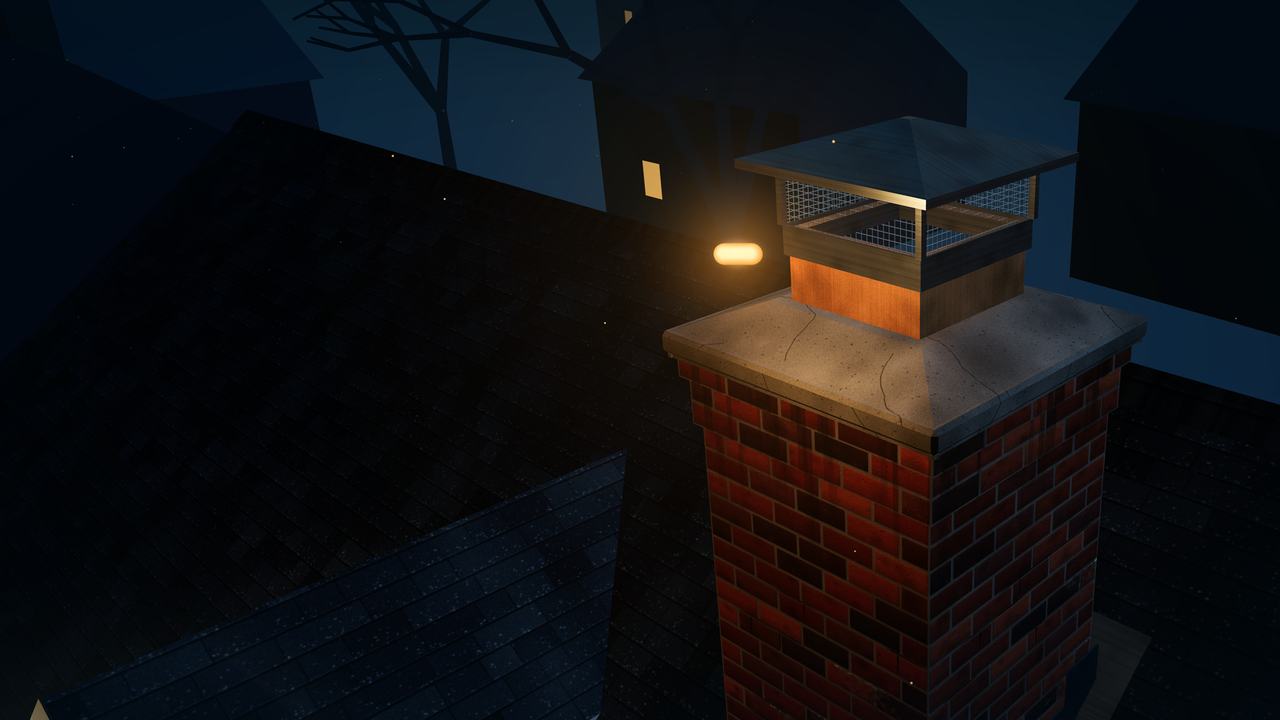
Chimney cap installation and replacement in Buffalo and Rochester, NY
A chimney cap is the cover over the flue opening at the top of the chimney. It keeps out rain, snow, animals and debris. ChimneY Royal does chimney cap work in Buffalo, Rochester and nearby towns. The price is on request, and we explain what we see and what it will cost before work starts.
Chimney caps
Price on request
We explain what we see and what it will cost before work starts.
How you get the price: ask in your request, on a call or on WhatsApp.
15% off for new customers. See the whole price list
Signs you need this
You can see the open end of a flue at the top of the chimney, with no cover over it.
Water drips into the firebox after rain or melting snow.
The cap looks bent, loose or out of place.
The screen on the cap looks dirty or clogged.
A wood-burning fireplace gives off a strong, unpleasant smell.
The cap is rusted, or rust stains run down the chimney below it.
Birds, animals, leaves or other debris get into the flue or the fireplace.
Included, and not included
Included
- The price of the cap work, on request
- An explanation of what we see
- The cost, before work starts
- A recommendation for the smallest repair that solves the problem
Not included
- Inspections and cleaning. They are separate services with fixed prices of their own.
- The Level 1 inspection ($69), the Level 2 inspection ($99) and the sweep and cleaning ($199). They are separate lines on our price list.
- A flat published price for cap work. The price is on request.
What we check
The cap over the flue
The Chimney Safety Institute of America says an open flue can collect rainwater and funnel it straight to the inside of the chimney.
Rust on a metal cap
HUD's inspection guide says a sheet metal hood with minor rust or corrosion should be repaired, and one with extensive rust or corrosion needs replacement.
The screen
HUD's guide notes that dirty or clogged spark screens hurt draft.
Open area under the cap
The Residential Code of New York State says the net free area under a rain cap must be at least four times the net free area of the flue outlet it serves.
Nests and debris
CSIA lists animal or bird nests that obstruct a flue among the problems that can let toxic gases into the house.
We recommend the smallest repair that solves the problem.
How a visit works
Step 1: Request a visit
Send a request from the booking page and tell us what you see at the top of the chimney. If you are a new customer, tick the new customer box in the form for 15% off, or say so when we call.
Step 2: We call back
After a request, the team calls back as soon as possible to confirm the appointment.
Step 3: You hear the price first
Nothing starts until you know what we found at the top of the chimney and what the cap work will cost.
Step 4: You decide
Our advice is the smallest repair that fixes it. The decision is yours.
Do not wait for a visit
Updated
What a chimney cap does
A flue ends at the top of the chimney in an opening that faces the sky. A chimney cap is the cover that sits over that opening.
The Chimney Safety Institute of America (CSIA) has described what happens without one. An open flue can collect rainwater and funnel it straight to the inside of the chimney, and a commonly sized flue can let in large amounts of rain or snow in a single winter. CSIA describes a cap as an inexpensive preventive measure a homeowner can use against water penetration and damage to the chimney.
A cap does four jobs:
- Water. It keeps rain and snow out of the flue.
- Animals. CSIA says a strong, well-designed cap prevents birds and animals from entering and nesting in the chimney.
- Debris. It keeps out leaves and other debris.
- Sparks. CSIA says caps also work as spark arrestors, keeping sparks off the roof and other nearby material that can burn.
One note on words. On this site, “cap” means the cover over the flue and “crown” means the masonry top of the chimney around it. The Residential Code of New York State calls the masonry top a “chimney cap” and the cover a “rain cap”. The crown has its own page, chimney crown repair, and the guide chimney cap, crown and flashing explained shows how the parts fit together.
Common types of chimney cap
By coverage. CSIA says caps may be designed to cover a single flue, multiple flues, a large portion of the chimney or the entire chimney top. A full coverage cap usually costs more at first. CSIA’s view is that it probably pays off over the long term, because it protects the whole crown.
By construction. HUD’s Residential Rehabilitation Inspection Guide describes two kinds of hood over a masonry chimney: stone or reinforced concrete caps on short masonry columns, and sheet metal caps on short sheet metal columns. The Brick Industry Association says rain caps range from turbine type metal caps to simple slabs set above the end of the flue liner.
With a screen. CSIA says caps also work as spark arrestors. Where a spark arrestor is installed on a masonry chimney, the New York code sets the screen openings: they must not let through spheres larger than 1/2 inch and must not block spheres smaller than 3/8 inch.
On a factory-built chimney. A prefabricated metal chimney in a framed chase has no masonry crown. A CSIA article says it has a sheet metal top called a chase cover instead, and HUD’s guide tells inspectors to check for a metal rain cap where the flue ends.
What caps are made of
CSIA says a cap should be made of sturdy, durable and corrosion resistant material. The Brick Industry Association says a metal rain cap should be corrosion-resistant.
The common metals do not age the same way. A CSIA article says common galvanized caps rust in a matter of years and that the rust can stain the chimney, while stainless steel caps do not rust. For spark arrestor screens, the New York code asks for heat and corrosion resistance equal to 19-gage galvanized steel or 24-gage stainless steel.
Rust does not always mean a new cap. HUD’s guide says a sheet metal hood with minor rust or corrosion should be repaired, and one with extensive rust or corrosion needs replacement. That fits how we work: we recommend the smallest repair that solves the problem.
How sizing generally works
A cap has to keep weather out without choking the flue, so sizing starts with the flue.
- Count the flues. CSIA says caps may cover a single flue, multiple flues, a large portion of the chimney or the entire chimney top, so the first questions are how many flues there are and how much of the top the cap should cover.
- Leave enough open area. The Residential Code of New York State says that where a rain cap is installed, the net free area under it must be at least four times the net free area of the flue outlet it serves. It sets the same rule for a spark arrestor.
- Leave enough height. HUD’s guide says the height of a hood above the top of the highest flue should be at least 25 percent greater than the narrowest dimension of the flue.
- Check the effect on draft. The Brick Industry Association says information about a manufactured rain cap’s effect on gas flow should come from its manufacturer. CSIA’s inspection procedures tell sweeps to make sure a rain cap does not create a restriction at the top of the chimney.
- Keep it removable. The New York code says the spark arrestor screen or chimney cap must be removable so the flue can be cleaned.
Ask your local code official how the code applies to your house.
Why caps matter in Buffalo and Rochester
Western New York gets a lot of snow. The National Weather Service puts normal annual snowfall at 95.4 inches in Buffalo and 102.0 inches in Rochester, and normal annual precipitation at 40.68 inches and 35.09 inches, based on the 1991 to 2020 climate normals.
The National Weather Service describes Western New York winters as generally cloudy, cold and snowy, but changeable, with frequent thaws and rain as well. It uses the same description for the Rochester area. CSIA’s warning about open flues applies to winters in which freeze and thaw cycles are common.
Water that gets inside does damage. CSIA says water in a chimney rusts steel and cast iron, and that water mixing with creosote in a wood-burning chimney makes a highly disagreeable odor that can spread through the home. Everything below the cap, crown to hearth, stays drier when the cap does its job.
Repairs at ChimneY Royal are planned with Western New York freeze and thaw cycles in mind. The guide chimney leaks and freeze and thaw in Western New York goes deeper. We work across the service area, including Buffalo and Rochester.
Birds, nests and chimney swifts
CSIA lists animal or bird nests that obstruct a flue among the problems that can let toxic gases into the house. CSIA says a strong, well-designed cap prevents birds and animals from entering and nesting in the chimney.
One bird needs a note. The U.S. Fish and Wildlife Service says the chimney swift is protected by the Migratory Bird Treaty Act, and that swifts arrive in the United States in March or April and leave in August or September. It also says it is illegal to destroy a nest that has eggs or chicks in it, and that the usual rule is to wait until the nest is no longer in use.
The same agency asks owners of masonry chimneys that suit swifts not to cap them, and says chimney or roof inspections and repairs should be done when swifts are not present. It adds that a chimney with a metal lining should be capped. If you think birds are nesting in your chimney, say so when you book.
How chimney cap pricing works
Chimney cap work has no flat price on our price list. The price is on request, and we explain what we see and what it will cost before work starts. We recommend the smallest repair that solves the problem, and after a request the team calls back as soon as possible to confirm the appointment.
The fixed prices are separate lines on the price list. The chimney inspection is $69 for Level 1 and $99 for Level 2, and a chimney sweep and cleaning is $199.
CSIA’s advice on keeping water out of a chimney covers the cap, the crown, the mortar joints and the flashing. If the cap is not the only problem, see chimney crown repair, chimney leak repair and chimney repair.
New customers get 15% off: tick the new customer box in the form, or say so when we call. To start, book a visit.
When to call someone right away
Cap work is planned work. These three things are not:
- Signs of a chimney fire. CSIA says the signs include loud cracking and popping, a lot of dense smoke and an intense, hot smell. Get out and call 911.
- A carbon monoxide alarm. Get to fresh air and call 911.
- A gas smell. Leave the house and call the gas utility or 911.
If you need an inspection for a home sale, for a new appliance or after a fire, tell us when you book so the scope can be confirmed.
Questions
How much should it cost to have a chimney cap installed?
We do not publish a flat price for chimney caps. The price is on request, and we explain what we see and what it will cost before work starts. New customers get 15% off: tick the new customer box in the form, or say so when we call.
How much should it cost to cap a chimney?
It depends on the chimney, so the price is on request and set after we have seen it. The Chimney Safety Institute of America says caps may be designed to cover a single flue, multiple flues, a large portion of the chimney or the entire chimney top, and those are different jobs. We explain what we see and what it will cost before work starts.
What trade installs chimney caps?
A chimney service company can do it. Chimney caps are on ChimneY Royal's list of chimney repair work, priced on request. The cap is also something the Chimney Safety Institute of America's inspection procedures tell sweeps to check: that it is not obstructed and does not restrict the top of the chimney.
Can I install a chimney cap myself?
Fit matters. The Residential Code of New York State says that where a rain cap is installed, the open area under it must be at least four times the area of the flue outlet, and HUD's inspection guide says dirty or clogged screens hurt draft. We explain what we see and what it will cost before work starts, so you know what your chimney needs before you buy a cap.
Is capping a chimney a good idea?
For keeping water out, yes. The Chimney Safety Institute of America describes a cap as an inexpensive preventive measure a homeowner can use against water penetration and damage to the chimney. One exception: the U.S. Fish and Wildlife Service asks owners of masonry chimneys that suit chimney swifts not to cap them, and says a chimney with a metal lining should be capped.
Is mortar or concrete better for a chimney cap?
Concrete is the better of the two. This question is really about the crown, the masonry top of the chimney, which the Residential Code of New York State also calls a chimney cap. HUD's inspection guide says cement washes, a tapered layer of mortar, are the least durable chimney top and crack and break after several years, and the code calls for a concrete, metal or stone cap. Our chimney crown repair page covers that part.
Sources
13 sources
What a cap does (water, birds and animals, sparks), how much of the chimney top a cap can cover, that a cap should be removable and corrosion resistant, and what water does inside a chimney.
Chimney Safety Institute of America, Water and Masonry (archived copy of March 18, 2024)web.archive.org
Caps keep out rain, animals, leaves and debris. Galvanized caps rust in a matter of years and can stain the chimney, stainless steel caps do not rust, and a prefabricated chimney has a chase cover instead of a masonry crown.
Chimney Safety Institute of America blog, Rain water and common chimney issues in spring (archived copy of January 27, 2023)web.archive.org
Section R1003.9.1 calls the masonry top a chimney cap and requires concrete, metal or stone. Section R1003.9.2 sets the net free area, screen material and screen openings of a spark arrestor where one is installed, and says the screen or chimney cap must be removable for cleaning. Section R1003.9.3: where a rain cap is installed, the net free area under it must be at least four times the net free area of the flue outlet.
The kinds of hood over a masonry chimney, the height of a hood above the flue, when a rusted sheet metal hood is repaired or replaced, that dirty or clogged spark screens hurt draft, that cement washes are the least durable chimney top, and the rain cap on a prefabricated chimney.
U.S. Department of Housing and Urban Development, Residential Rehabilitation Inspection Guide (2000)huduser.gov
Rain caps range from turbine type metal caps to simple slabs set above the end of the flue liner, a metal cap should be corrosion-resistant, and the effect of a manufactured cap on gas flow should be obtained from its manufacturer.
Brick Industry Association, Technical Notes 19B, Residential Chimneys: Design and Constructiongobrick.com
Sweeps are told to make sure a rain cap is not obstructed and does not create a restriction at the top of the chimney.
Chimney Safety Institute of America, Standard Operating Procedure, Level 2 Inspection, Masonry Chimneyweb.csia.org
Chimney swifts are protected by the Migratory Bird Treaty Act, arrive in March or April and leave in August or September. Owners of suitable masonry chimneys are asked not to cap them, metal-lined chimneys should be capped, and chimney or roof inspections and repairs should be done when swifts are not present.
U.S. Fish and Wildlife Service, On the Wing with Chimney Swiftsfws.gov
It is illegal to destroy a nest that has eggs or chicks in it, and it is usually required to wait until the nest is inactive.
Normal annual snowfall is 95.4 inches in Buffalo and 102.0 inches in Rochester, and normal annual precipitation is 40.68 inches and 35.09 inches.
National Weather Service Buffalo, climate normals 1991 to 2020weather.gov
Western New York winters are generally cloudy, cold and snowy but changeable, with frequent thaws and rain as well.
National Weather Service Buffalo, Buffalo climate narrativeweather.gov
The same description of changeable winters with frequent thaws is used for the Rochester area.
National Weather Service Buffalo, Rochester climate narrativeweather.gov
Animal or bird nests that obstruct a flue are among the problems that can let toxic gases into the house.
Chimney Safety Institute of America, Avoiding Carbon Monoxide Hazardscsia.org
Signs of a chimney fire include loud cracking and popping, a lot of dense smoke and an intense, hot smell.
Chimney Safety Institute of America, Preventing Chimney Firescsia.org
Ready for winter, crown to hearth.
A new or replacement cap over the flue at the top of your chimney, with the price on request.
Book a visit
After a request, the team calls back as soon as possible to confirm the appointment.
Your request was not sent.
Check the form and send it again. We need your name, a phone number or an email, and your confirmation at the end.
It has not reached us yet. If it still does not go through, reach us directly.
Your request was sent. See what happens next