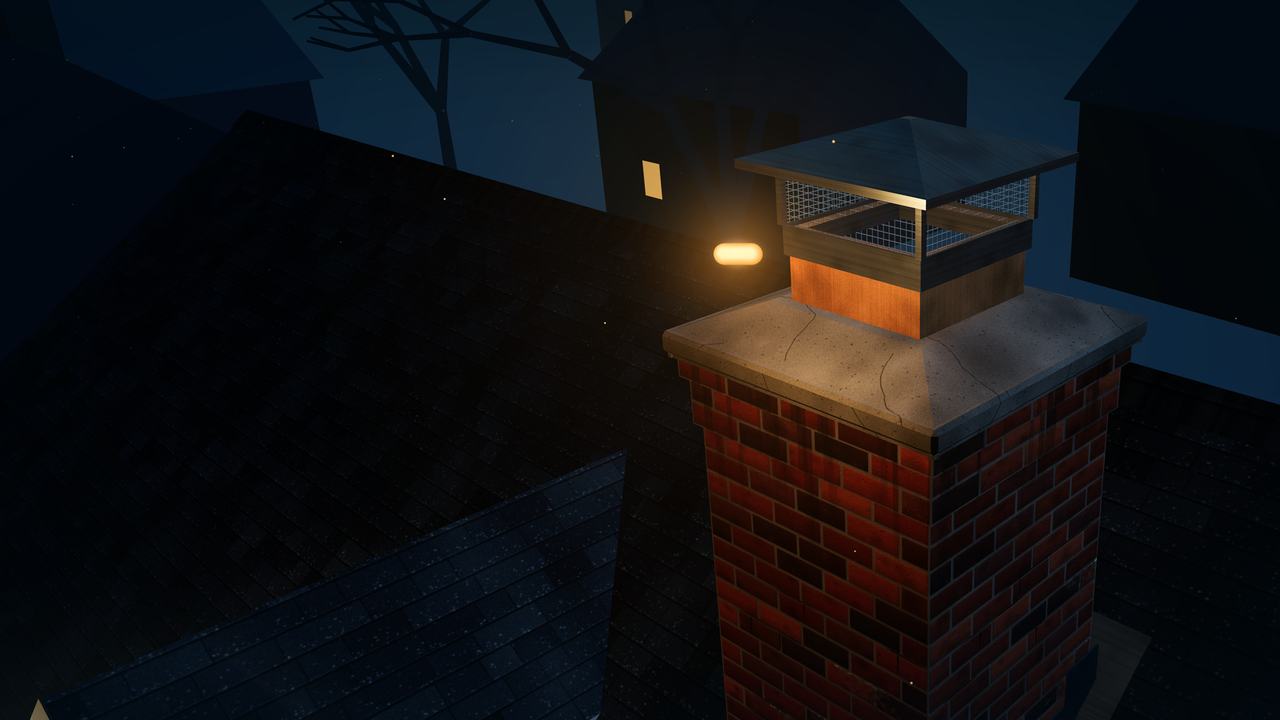
Chimney crown repair in Buffalo and Rochester, NY
The chimney crown is the sloped masonry top that seals the chimney from the flue liner to the outer edge. When it cracks, water gets into the brick and mortar below. ChimneY Royal repairs chimney crowns in Buffalo, Rochester and nearby towns. The price is on request, and we explain the cost before work starts.
Crown repair
Price on request
We explain what we see and what it will cost before work starts.
How you get the price: ask in your request, on a call or on WhatsApp.
15% off for new customers. See the whole price list
Signs you need this
You can see cracks in the top surface of the chimney, around the flue.
Rust stains show on the top of the chimney.
The top of the chimney looks flat, or holds water instead of shedding it.
White deposits show on the brick near the top of the chimney.
Water stains appear on a ceiling or wall near the chimney.
Pieces of mortar or concrete have chipped or broken off the top of the chimney.
The top rows of brick are flaking, or the mortar between them is crumbling.
Included, and not included
Included
- The price of the crown repair, on request
- An explanation of what we see
- What it will cost, before work starts
- Our recommendation: the smallest repair that solves the problem
Not included
- Inspections and cleaning. They are separate services with fixed prices of their own.
- The Level 1 inspection ($69) and the Level 2 inspection ($99). They are separate lines on our price list.
- A comprehensive leak test. Even the Level 2 inspection is not one, and it does not guarantee that a leak will be found.
- A fixed price before we have seen the crown. Crown repair is priced on request.
What we check
Cracks in the top surface
The Chimney Safety Institute of America says crowns made from common mortar mix crack, chip or deteriorate from weather exposure.
The slope
CSIA says a crown should slope so that water runs from the flue to the edge.
The drip edge
CSIA says an overhanging drip edge sends runoff away from the chimney, which helps prevent erosion of the brick and mortar on its vertical faces.
The joint around the flue liner
The Residential Code of New York State requires a caulked bond break around any flue liners. A CSIA article observes that few crowns have proper bond breaks.
The brick below the crown
HUD's inspection guide says a deteriorated chimney top lets water into the masonry below and exposes it to freeze and thaw cycles.
We recommend the smallest repair that solves the problem.
How a visit works
Step 1: Request a visit
Send a request from the booking page and tell us what you can see from the ground. New customers get 15% off: tick the new customer box in the form, or say so when we call.
Step 2: We call back
After a request, the team calls back as soon as possible to confirm the appointment.
Step 3: You hear the price first
Nothing starts until you know what we found on the crown and what the repair will cost.
Step 4: You decide
Our advice is the smallest repair that fixes it. Whether to go ahead is your call.
Do not wait for a visit
Updated
What the chimney crown is
The crown is the top of a masonry chimney. The Chimney Safety Institute of America (CSIA) has defined it as the element that covers and seals the top of the chimney from the flue liner to the chimney edge. Some people call it the chimney wash.
Its whole job is water. CSIA says a crown should slope so that water runs from the flue to the edge, and that an overhanging drip edge sends the runoff away from the chimney, which helps prevent erosion of the brick and mortar on its vertical faces.
It is a real part of the chimney, and it is the part our name points to. From crown to hearth, the crown is the top of the masonry.
A word about names. The Residential Code of New York State, the Brick Industry Association and HUD all call this part a “cap”. On this site “crown” is the masonry top and “cap” is the cover over the flue opening, which has its own page: chimney caps. The guide chimney cap, crown and flashing explained sorts out the terms.
Why crowns crack
Many crowns were not built to last. CSIA says most masonry chimneys are built with an inadequate crown made from common mortar mix, which will crack, chip or deteriorate from weather exposure. HUD’s Residential Rehabilitation Inspection Guide describes the same thing: a tapered layer of mortar, called a cement wash, that cracks and breaks after several years. It calls cement washes the least durable chimney top.
Better crowns still face three stresses:
- Shrinkage. The Brick Industry Association says that when a cap is cast in place, shrinkage of the concrete as it cures is a certainty. It calls for adequate reinforcement to help control cracking from shrinkage and thermal movements.
- Movement. The same technical note says a prefabricated cap needs a bond break between the brickwork and its setting bed, so the cap can respond to differential movement without distressing the brickwork. The New York code requires a caulked bond break around any flue liners. A CSIA article observes that few crowns have proper bond breaks.
- Thin edges. The Brick Industry Association says feathering a cast-in-place cap to the edge should be avoided, because it reduces the thickness at the edge and raises the potential for deterioration.
Then there is exposure. HUD notes that chimneys have greater exposure to the weather than most building elements.
How repair and replacement differ
In general terms there are two paths, and the condition of the crown decides between them.
Repair suits a crown that is still solid. A CSIA article puts it this way: if the crown seems solid and is just cracked, not falling apart, a flexible repair can be applied. HUD’s guide says reinforced concrete and stone caps with minor, shallow spalling and cracking should be repaired.
Replacement suits a crown that has failed. The same CSIA article says a crown that is not solid, is falling apart, or was laid on plywood or wood shingles should be torn off and replaced. HUD says a cement wash should be replaced if it is not properly sloped, is extensively cracked or spalled, or shows rust stains.
The sources also describe what a replacement aims for. CSIA says a proper crown is a Portland cement-based mixture, cast or formed with an overhang of at least two inches beyond all sides of the chimney, with the flue tile standing at least two inches above it. The Residential Code of New York State calls for a concrete, metal or stone top that is sloped to shed water, with a drip edge and a caulked bond break around any flue liners. Ask your local code official how the code applies to your house.
Two cautions. CSIA has warned that paint or clear sealers should never be used to waterproof a chimney, because they trap water vapor and moisture inside. It also says waterproofing is preventive, so existing cracks and gaps should be repaired first.
Which path fits your chimney is decided by looking closely at the crown. We recommend the smallest repair that solves the problem.
How a failing crown lets water into the masonry
A crown is a lid. When it cracks, the lid leaks. HUD’s guide says a deteriorated chimney top allows water into the masonry below.
From there the brick does the rest. CSIA says common brick is like a sponge, absorbing water and wicking moisture to the inside of the chimney. CSIA says an overhanging drip edge directs runoff from the crown away from the chimney, which helps protect the brick and mortar on its vertical faces.
CSIA’s list of what water does to a chimney includes a stained exterior, decayed exterior mortar, a cracked or deteriorated flue lining, and water stained walls and ceilings. That is why a crown problem can show up somewhere else first. If water is already inside the house, see chimney leak repair. If the mortar joints below the crown are crumbling, see chimney tuckpointing. If the top courses of brick are too far gone, chimney rebuilding may be part of the answer.
Why freeze and thaw make it worse here
Water is slow. Ice is not. CSIA says masonry deteriorates quickly in the freeze and thaw process, in which moisture that has penetrated the material periodically freezes and expands, causing undue stress. A CSIA article describes the visible result: when the water in a brick freezes, it pops the face of the brick off. HUD ties it back to the crown: a failed top exposes the masonry below to freeze and thaw cycles.
This region supplies the cycles. NOAA’s 1991 to 2020 climate normals show an average of 123.7 days a year with a low at or below 32 F in Buffalo and 128.8 in Rochester. The National Weather Service describes Western New York winters as changeable, with frequent thaws and rain as well, and uses the same words for the Rochester area.
Many homes in the two cities have been through a lot of those winters. According to the Census Bureau’s 2020 to 2024 American Community Survey, an estimated 61.0 percent of the housing units in the City of Buffalo and 53.7 percent in the City of Rochester were built in 1939 or earlier.
Repairs at ChimneY Royal are planned with Western New York freeze and thaw cycles in mind. We work in Buffalo, Rochester and the towns around them. For the longer version, read chimney leaks and freeze and thaw in Western New York.
How crown repair pricing works
Crown repair has no flat price. The price is on request, and we explain what we see and what it will cost before work starts. After a request, the team calls back as soon as possible to confirm the appointment. The fixed prices are on the pricing page.
If you want a fuller look at the chimney, the Level 2 chimney inspection costs $99. It includes an internal camera examination where accessible and an evaluation for visible signs of water intrusion, leaks and masonry deterioration. It is not a comprehensive leak test and does not guarantee that a leak will be found.
New customers get 15% off: tick the new customer box in the form, or say so when we call. Book a visit.
What cannot wait for an appointment
A crown wears out over years. A few things need action in minutes, and the first call is not to us.
- If you notice signs of a chimney fire, get out and call 911. CSIA says flames or dense smoke may shoot from the top of the chimney, and that homeowners report a low rumbling sound that reminds them of a freight train.
- If a carbon monoxide alarm sounds, get to fresh air and call 911. CSIA lists damaged or deteriorating flue liners among the problems that can let toxic gases into a house.
- If you smell gas, leave the house and call the gas utility or 911.
If you need an inspection for a home sale, for a new appliance or after a fire, tell us when you book so the scope can be confirmed.
Questions
How much does it cost to fix a chimney crown?
There is no flat price, because it depends on whether the crown can be repaired or has to be replaced. ChimneY Royal prices crown repair on request, and we explain what we see and what it will cost before work starts. New customers get 15% off: tick the new customer box in the form, or say so when we call.
What happens if a chimney crown is cracked?
Water gets in. HUD's inspection guide says a deteriorated chimney top allows water into the masonry below and exposes it to freeze and thaw cycles, and that the masonry near the top of the chimney deteriorates as a result. The Chimney Safety Institute of America says moisture that has penetrated masonry freezes and expands, which puts the material under stress.
Can I repair my chimney crown myself?
The harder question is whether the crown can be repaired at all. A Chimney Safety Institute of America article says a crown that seems solid and is just cracked, not falling apart, has a repair option, while one that is not solid or is falling apart should be torn off and replaced. CSIA has also warned that paint or clear sealers should never be used to waterproof a chimney, because they trap moisture inside. Seeing the crown up close tells you which case you have, and we explain what we see and what it will cost before work starts.
What do you use to repair a chimney crown?
It depends on what we find, and we tell you before work starts. In general terms, a Chimney Safety Institute of America article describes two options: a repair applied to a crown that is solid but cracked, or a new crown where the old one is not solid. For a new top, the Residential Code of New York State calls for concrete, metal or stone, sloped to shed water, with a drip edge and a caulked bond break around the flue liner.
How long does a chimney crown last?
It depends mostly on what it is made of. HUD's inspection guide says a cement wash, a tapered layer of mortar, cracks and breaks after several years, and calls cement washes the least durable chimney top. The Brick Industry Association says chimneys that see more severe exposure than normal weathering may need repairs at shorter intervals. We have not found a reliable figure in years for a concrete crown, so we do not quote one.
Will insurance pay for chimney repair?
That is a question for your insurance company. We cannot tell you what a policy covers. We explain what we see and what it will cost before work starts, so you can take that to your insurer.
Sources
12 sources
What the crown is, its slope and drip edge, why mortar crowns crack, what a proper crown is made of, how brick absorbs water, what water and freeze and thaw do to a chimney, and the warning about paint and clear sealers.
Chimney Safety Institute of America, Water and Masonry (archived copy of March 18, 2024)web.archive.org
Few crowns have proper bond breaks. If a crown seems solid and is just cracked, not falling apart, one option is to apply a flexible repair, and a crown that is not solid, is falling apart or was laid on plywood or wood shingles should be torn off and replaced. When the water in brick freezes, it pops the faces of the brick off.
Chimney Safety Institute of America blog, Rain water and common chimney issues in spring (archived copy of January 27, 2023)web.archive.org
Cement washes are the least durable chimney top, and a cement wash is a tapered layer of mortar that cracks and breaks after several years. When a chimney top should be repaired and when it should be replaced. A deteriorated top lets water into the masonry below and exposes it to freeze and thaw cycles. Chimneys have greater exposure to the weather than most building elements.
U.S. Department of Housing and Urban Development, Residential Rehabilitation Inspection Guide (2000)huduser.gov
Shrinkage of cast-in-place concrete as it cures is a certainty, reinforcement helps control cracking from shrinkage and thermal movements, a prefabricated cap needs a bond break so it can respond to differential movement without distressing the brickwork, and feathering a cap to a thin edge raises the potential for deterioration.
Brick Industry Association, Technical Notes 19B, Residential Chimneys: Design and Constructiongobrick.com
Chimneys that experience more severe exposure than normal weathering may require repairs at shorter intervals. Efflorescence is the white deposit left when moisture carrying dissolved salts evaporates.
Brick Industry Association, Technical Notes 46, Maintenance of Brick Masonrygobrick.com
Section R1003.9.1: masonry chimneys shall have a concrete, metal or stone cap, sloped to shed water, with a drip edge and a caulked bond break around any flue liners.
Buffalo averages 123.7 days a year with a low at or below 32 F, and Rochester averages 128.8.
NOAA National Centers for Environmental Information, 1991 to 2020 annual climate normals for Buffalo and Rochesterncei.noaa.gov
Western New York winters are changeable and include frequent thaws and rain as well.
National Weather Service Buffalo, Buffalo climate narrativeweather.gov
The same description of changeable winters with frequent thaws is used for the Rochester area.
National Weather Service Buffalo, Rochester climate narrativeweather.gov
An estimated 61.0 percent of housing units in the City of Buffalo and 53.7 percent in the City of Rochester were built in 1939 or earlier (five-year estimates, with margins of error of 1.3 and 1.2 percentage points).
U.S. Census Bureau, American Community Survey table DP04, 2020 to 2024data.census.gov
Damaged or deteriorating flue liners are among the problems that can let toxic gases into the house.
Chimney Safety Institute of America, Avoiding Carbon Monoxide Hazardscsia.org
Flames or dense smoke may shoot from the top of the chimney in a chimney fire, and homeowners report being startled by a low rumbling sound that reminds them of a freight train.
Chimney Safety Institute of America, Preventing Chimney Firescsia.org
Ready for winter, crown to hearth.
Repair of a cracked or crumbling masonry crown at the top of your chimney, with the price on request.
Book a visit
After a request, the team calls back as soon as possible to confirm the appointment.
Your request was not sent.
Check the form and send it again. We need your name, a phone number or an email, and your confirmation at the end.
It has not reached us yet. If it still does not go through, reach us directly.
Your request was sent. See what happens next