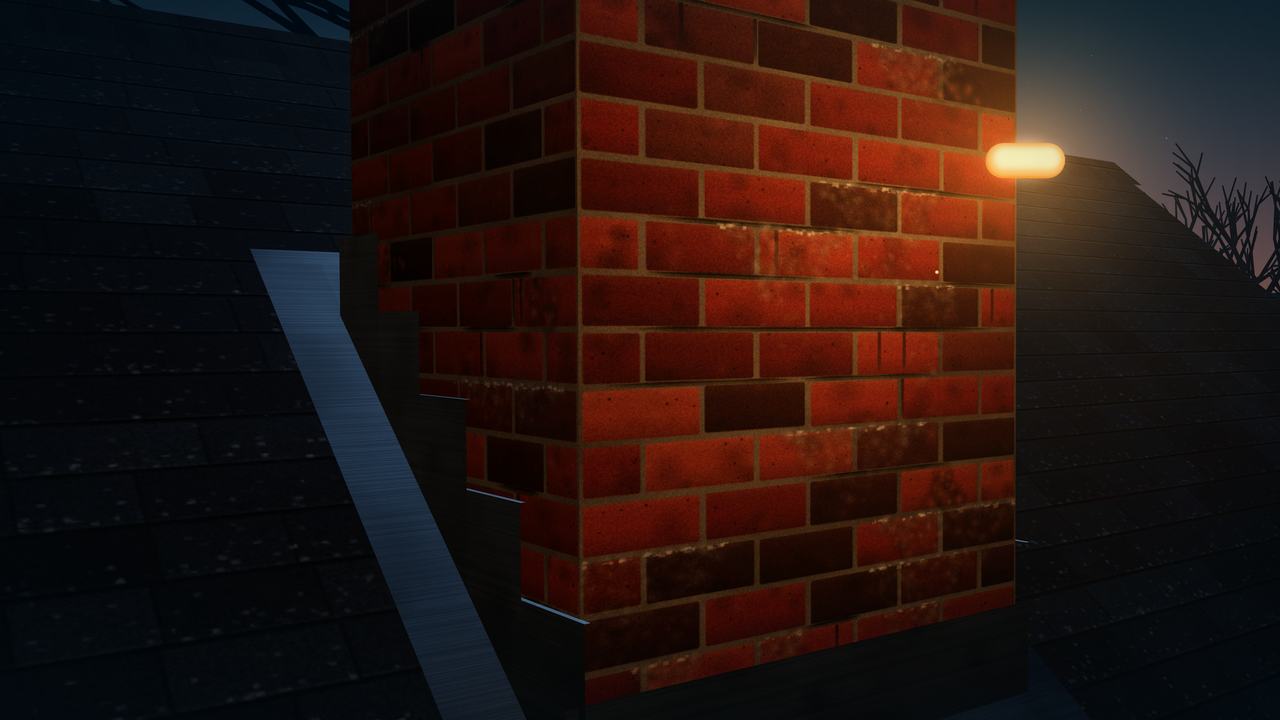
Chimney rebuilding in Buffalo and Rochester, NY
A chimney is rebuilt when repair is no longer enough. A HUD inspection guide says unstable chimneys, or those with a noticeable lean, should be dismantled and rebuilt. ChimneY Royal rebuilds chimneys in Buffalo, Rochester and nearby towns, with the price on request, and recommends the smallest repair that solves the problem.
Chimney rebuilding
Price on request
We explain what we see and what it will cost before work starts.
How you get the price: ask in your request, on a call or on WhatsApp.
15% off for new customers. See the whole price list
Signs you need this
The chimney leans where it rises above the roof.
The chimney leans away from the wall it is joined to, with a crack where they meet.
Bricks are loose or have fallen from the chimney.
Many bricks have lost their faces, not only one or two.
Cracks run in a stepped or diagonal line, or pass through several bricks.
You have had a chimney fire. Tell us when you book so the scope can be confirmed.
Included, and not included
Included
- What we see and what the work will cost, explained before work starts
- Our recommendation for the smallest repair that solves the problem
- The price of the rebuild, on request
Not included
- Inspections and cleaning. They are separate services with fixed prices of their own: $69 for Level 1, $99 for Level 2 and $199 for a sweep and cleaning.
- A list price. The price of a rebuild is on request, because it depends on how much of the chimney has to come down.
- A structural engineer's report, where one is called for.
- The permit decision. Your local building department decides whether a rebuild needs a building permit.
What we check
Lean and stability
A federal inspection guide says unstable chimneys, or those with a noticeable lean, should be dismantled and rebuilt.
Crack patterns
The Brick Industry Association says stepped or diagonal cracks, and cracks through several bricks, can point to a structural issue.
Masonry near the top
The same federal guide says a deteriorated cap lets water into the masonry below and exposes it to freeze-thaw cycles.
We recommend the smallest repair that solves the problem.
How a visit works
Step 1: Request a visit
Send a request from the booking page. If the work follows a chimney fire, a home sale or a new appliance, tell us when you book so the scope can be confirmed.
Step 2: We call back
After a request, the team calls back as soon as possible to confirm the appointment.
Step 3: You hear the price first
Nothing starts until you know what we found and what the work will cost.
Step 4: Repair or rebuild
Our advice is the smallest repair that fixes it, planned with Western New York freeze and thaw cycles in mind. The price of a chimney rebuild is on request.
Do not wait for a visit
Updated
When repair is no longer enough
A rebuild is the last rung of a short ladder. We recommend the smallest repair that solves the problem, so we start at the bottom:
- Repoint worn mortar joints. See chimney tuckpointing.
- Replace bricks that are broken or have lost their faces.
- Rebuild the section that is no longer sound. This is a partial rebuild.
- Rebuild the whole chimney. This is a full rebuild.
The U.S. Department of Housing and Urban Development (HUD) marks the step from repair to rebuild in its inspection guide. Deteriorated mortar joints should be pointed. Unstable chimneys, or those with a noticeable lean, should be dismantled and rebuilt. For existing buildings, the 2025 Property Maintenance Code of New York State adds that chimneys shall be maintained structurally safe and sound, and in good repair.
Two other findings can lead to a rebuild:
- Structural cracking. The Brick Industry Association treats cracks wider than 0.075 inch, cracks through several bricks, cracks in a stepped or diagonal pattern and widespread spalled brick as signs of a structural issue. It says such issues generally warrant an investigation by a professional engineer.
- A chimney fire. The Chimney Safety Institute of America (CSIA) says that after a confirmed chimney fire the repair can range from replacing a few flue tiles to installing a new liner system or rebuilding the entire chimney.
Not every lean is a brick problem. HUD’s guide describes a chimney that is part of an exterior wall and leans away from it, cracking where it joins other masonry, because its foundation is inadequate. Its instruction for that case includes a short line: consult a structural engineer.
Partial rebuild or full rebuild
A partial rebuild takes down and rebuilds part of the chimney. A full rebuild takes down and rebuilds all of it.
The upper part gets the attention for a reason. HUD’s guide points out that a chimney has no lateral support from the point where it emerges from the roof. Two of the common problems it lists are in that upper part: masonry near the top that deteriorates because a deteriorated cap lets water in, and leaning where the chimney projects above the roof, caused by deteriorated mortar joints.
What a rebuild generally involves
A rebuilt section is new masonry. The sources on this page point to these parts of the job:
- Taking down. HUD’s wording for an unstable or leaning chimney is that it should be dismantled and rebuilt.
- Brick and mortar chosen for the weather. The Brick Industry Association’s note on residential chimneys says chimney brick should be Grade SW to assure sufficient durability, and recommends Type N portland cement-lime mortar for chimneys. Where replacement brick goes into existing masonry, its maintenance note says the new mortar should have similar physical properties to the existing mortar.
- The flue liner. The Residential Code of New York State says masonry chimneys shall be lined, so the liner is part of any rebuild conversation.
- The top. The code calls for a concrete, metal or stone cap, which is the part CSIA calls the crown. It must slope to shed water, and the chimney must have a drip edge and a caulked bond break around any flue liners. See chimney crown repair and chimney caps.
- The roof joint. CSIA describes flashing as the seal between the roofing material and the chimney. The Brick Industry Association describes it as two layers, base flashing and counter flashing. A leak at this joint has its own page: chimney leak repair.
- Height. The code says a masonry chimney shall extend at least 3 feet above the point where it passes through the roof, and at least 2 feet higher than any part of the building within 10 feet.
The code quoted here is the 2025 Residential Code of New York State, which took effect on December 31, 2025. It is a construction code. How it applies to a rebuild of an existing chimney is for the local code official to decide.
What drives the scope
We do not publish a rebuild price. The price of chimney rebuilding is on request. The sources above point to these things that can change the scope:
- How far down the unsound masonry goes.
- Why the chimney failed. Water from a failed top, a foundation that has settled and a chimney fire lead to different jobs.
- The condition of the flue liner.
- Whether the crown and the flashing have to be renewed with the brickwork.
- The height the code calls for.
- Whether a building permit or an engineer is involved.
Permits and paperwork in New York
Whether a rebuild needs a building permit is a local decision. New York’s rules for code enforcement, 19 NYCRR Part 1203, tell each local code enforcement program to require building permits for work that must conform to the Uniform Code. A program may exempt repairs, but only repairs with no impact on fire and life safety, and the rule’s first example of such an impact is any part of the structural system. The same rule lists chimneys and flues among the parts of construction to be inspected.
Separately, New York Executive Law section 378 says an owner must first secure a building permit from the appropriate local government official before installing a solid fuel burning heating appliance, chimney or flue in a dwelling used as a residence.
The practical step is to ask your city, town or village building department before work starts.
One more rule is worth knowing before you sign for any large repair. New York’s General Business Law says a home improvement contract for more than five hundred dollars must be in writing and signed by all parties. It also gives the owner until midnight of the third business day after signing to cancel.
Freeze, thaw and the building season
NOAA’s 1991 to 2020 climate normals put the median first fall freeze on October 26 in Buffalo and October 25 in Rochester, and the median last spring freeze on April 24 in both. That is about six months between the median first and last freeze. The National Weather Service gives 1991 to 2020 normal snowfall of 95.4 inches a year in Buffalo and 102.0 inches in Rochester.
Water and frost are the pair that HUD’s guide blames for a failing chimney top. Our repairs are planned with Western New York freeze and thaw cycles in mind.
Frost matters during the work as well. The Brick Industry Association says the temperature of mortar should be kept above freezing until it is used, and that newly constructed masonry must be protected, because the development of strength and bond may be compromised if freezing occurs.
How rebuild pricing works
The price of a rebuild is on request. It has no list price, because the things listed under what drives the scope change the job from one chimney to the next. We explain what we see and what it will cost before work starts, and we recommend the smallest repair that solves the problem.
A chimney inspection is a separate service with published prices: Level 1 costs $69 and Level 2 costs $99. If you need an inspection for a home sale, for a new appliance or after a fire, tell us when you book so the scope can be confirmed. The guide to buying a house with a fireplace explains more.
Our prices are on the pricing page, and chimney repair covers the smaller repairs. We take requests from Buffalo, Rochester, Hamburg, Orchard Park and the other towns on our service areas page. To start, book a visit.
When to call someone right away
A rebuild is planned work. These situations are not.
- Bricks are falling, or the chimney leans. HUD’s guide says unstable chimneys, or those with a noticeable lean, should be dismantled and rebuilt. Request a visit and tell us what you see.
- Signs of a chimney fire. Get out and call 911. CSIA says not to use the chimney afterward until it has been swept and evaluated by a qualified chimney professional.
- A carbon monoxide alarm. Get to fresh air and call 911. This is not only a fireplace matter. The Census Bureau’s 2020 to 2024 American Community Survey estimates that utility gas is the main heating fuel in 86.8 percent of occupied housing units in Erie County and 74.6 percent in Monroe County. The state’s Residential Code says that where inspection reveals an existing chimney is not safe for the intended application, it shall be repaired, rebuilt, lined, relined or replaced.
Questions
When should a chimney be rebuilt?
When it is unstable or leaning, and repair can no longer make it sound. The inspection guide of the U.S. Department of Housing and Urban Development says deteriorated mortar joints should be pointed, and unstable chimneys or those with a noticeable lean should be dismantled and rebuilt. After a chimney fire, the Chimney Safety Institute of America says the repair can also run as far as rebuilding the entire chimney.
How much should a chimney rebuild cost?
There is no flat price, and we do not publish a typical one. The price of a chimney rebuild at ChimneY Royal is on request, and we explain what we see and what it will cost before work starts. New customers get 15% off: tick the new customer box in the form, or say so when we call.
Can an old chimney be repaired?
Yes, as long as it is still stable, and that is where we start: we recommend the smallest repair that solves the problem. Worn mortar joints can be repointed and damaged bricks replaced. A federal inspection guide reserves dismantling and rebuilding for chimneys that are unstable or have a noticeable lean.
Will insurance cover a chimney rebuild?
Only your insurer can answer that, because it depends on your policy and on what caused the damage. We do not decide or promise coverage. What we can do is explain what we see and what the work will cost before it starts.
Does homeowners insurance cover a crumbling chimney?
Possibly not, if wear and tear is the cause. The New York State Department of Financial Services names wear and tear as one of the exclusions in a homeowners policy. Your own policy decides, so read it or ask your insurer or agent.
How much to have a chimney fully restored?
The price of a full rebuild is on request, not listed. We explain what we see and what it will cost before work starts. The scope can change with how much of the chimney has to come down and whether the flue liner, the crown and the flashing are involved.
Sources
19 sources
Unstable chimneys or those with a noticeable lean should be dismantled and rebuilt, deteriorated joints should be pointed, a chimney leaning away from an exterior wall because of an inadequate foundation calls for a structural engineer, chimneys have no lateral support from the point where they emerge from the roof, and a deteriorated cap lets water into the masonry below and exposes it to freeze-thaw cycles.
U.S. Department of Housing and Urban Development, Residential Rehabilitation Inspection Guide (2000)huduser.gov
The crack widths, crack patterns and widespread spalling that indicate structural issues and warrant a professional engineer, and that replacement brickwork needs mortar with properties similar to the existing mortar.
Brick Industry Association, Technical Notes 46, Maintenance of Brick Masonry (2017)gobrick.com
Chimney brick should be Grade SW for durability, Type N portland cement-lime mortar is recommended for chimneys, and base flashing and counter flashing are installed where the chimney meets the roof.
Mortar temperature is kept above freezing until it is used, and newly constructed masonry must be protected because the development of strength and bond may be compromised if freezing occurs.
Brick Industry Association, Technical Notes 1, Cold and Hot Weather Construction (2018)gobrick.com
After a confirmed chimney fire the repair can range from replacing a few flue tiles to a new liner system or rebuilding the entire chimney.
Chimney Safety Institute of America, Preventing Chimney Firescsia.org
After a chimney fire, do not use the chimney until it has been swept and evaluated by a qualified chimney professional.
Chimney Safety Institute of America, What you need to know after a chimney firecsia.org
Flashing is the seal between the roofing material and the chimney, and a proper chimney crown projects beyond all sides of the chimney.
Chimney Safety Institute of America, Water and Masonry (archived capture of March 18, 2024)web.archive.org
Masonry chimneys shall be lined, shall have a sloped cap with a drip edge and a caulked bond break, and shall extend at least 3 feet above the roof penetration and 2 feet higher than any part of the building within 10 feet.
2025 Residential Code of New York State, Chapter 10, Chimneys and Fireplacescodes.iccsafe.org
Where inspection reveals that an existing chimney is not safe for the intended application, it shall be repaired, rebuilt, lined, relined or replaced.
2025 Residential Code of New York State, Chapter 24, Fuel Gascodes.iccsafe.org
Chimneys shall be maintained structurally safe and sound, and in good repair.
2025 Property Maintenance Code of New York State, Chapter 3, section 304.11codes.iccsafe.org
The 2025 Uniform Code, which includes the 2025 Residential Code of New York State, took effect on December 31, 2025.
New York State Department of State, notice of adoption of the 2025 Uniform Codedos.ny.gov
Local code enforcement programs must require building permits for work that must conform to the Uniform Code, may exempt repairs only where there is no impact on fire and life safety such as the structural system, and include chimneys and flues among the construction elements to be inspected.
New York State Department of State, 19 NYCRR Part 1203dos.ny.gov
An owner must first secure a building permit from the appropriate local government official before installing a solid fuel burning heating appliance, chimney or flue in a dwelling used as a residence.
New York Executive Law, section 378nysenate.gov
A home improvement contract is an agreement for home improvement work with a total price of more than five hundred dollars.
New York General Business Law, section 770nysenate.gov
A home improvement contract must be in writing and signed by all parties, and the owner may cancel until midnight of the third business day after signing.
New York General Business Law, section 771nysenate.gov
Wear and tear is one of the exclusions in a homeowners policy.
New York State Department of Financial Services, homeowners insurance questionsdfs.ny.gov
The 1991 to 2020 median first fall freeze is October 26 in Buffalo and October 25 in Rochester, and the median last spring freeze is April 24 in both.
NOAA National Centers for Environmental Information, 1991 to 2020 annual climate normals for Buffalo and Rochesterncei.noaa.gov
The 1991 to 2020 normal annual snowfall is 95.4 inches in Buffalo and 102.0 inches in Rochester.
National Weather Service Buffalo, climate normals 1991 to 2020weather.gov
Utility gas is the main heating fuel in 86.8 percent of occupied housing units in Erie County and 74.6 percent in Monroe County, 2020 to 2024 estimates.
U.S. Census Bureau, American Community Survey 2020 to 2024, table DP04data.census.gov
Ready for winter, crown to hearth.
Chimney rebuilding, partial or full, for a chimney that repair alone can no longer make sound. The price is on request.
Book a visit
After a request, the team calls back as soon as possible to confirm the appointment.
Your request was not sent.
Check the form and send it again. We need your name, a phone number or an email, and your confirmation at the end.
It has not reached us yet. If it still does not go through, reach us directly.
Your request was sent. See what happens next