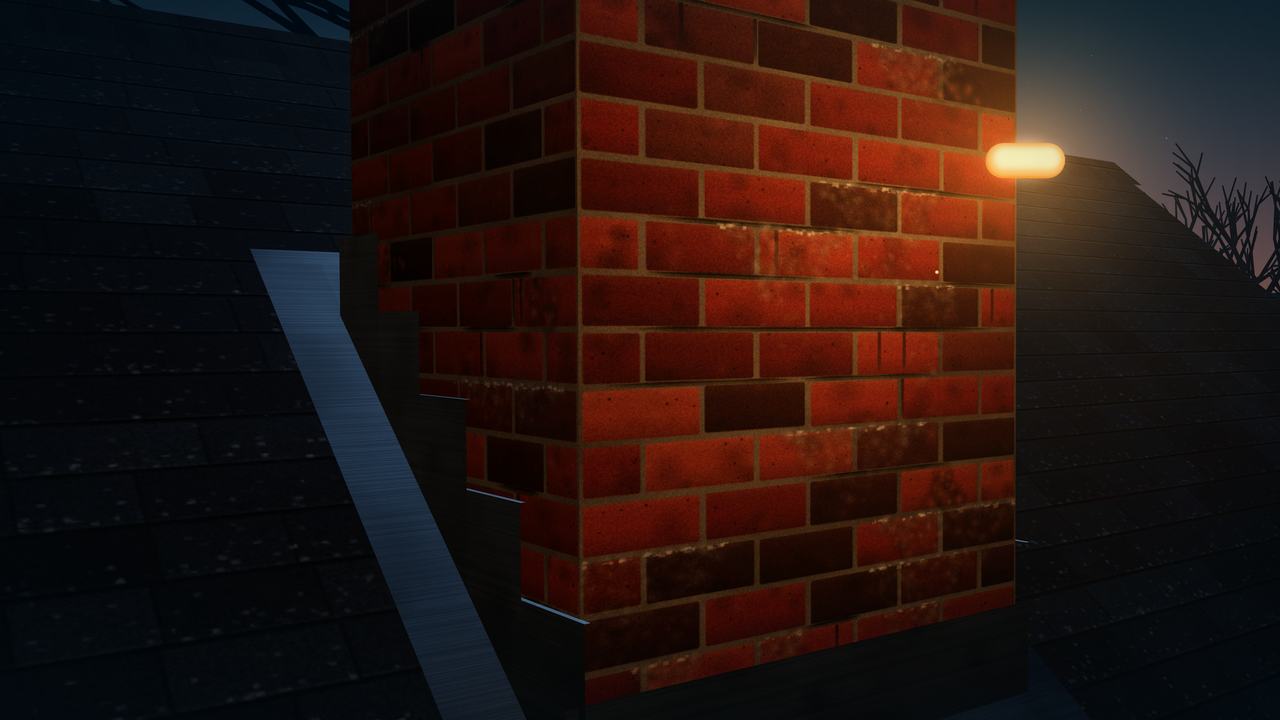
Chimney tuckpointing and brick repair in Buffalo and Rochester, NY
Chimney repointing, sometimes called tuckpointing, means removing deteriorated mortar from the joints between the bricks and placing new mortar. The Brick Industry Association calls it one of the most effective ways to reduce moisture penetration through worn joints. ChimneY Royal repairs brick and mortar in Buffalo, Rochester and nearby towns. The price is on request.
Brick and mortar repair
Price on request
We explain what we see and what it will cost before work starts.
How you get the price: ask in your request, on a call or on WhatsApp.
15% off for new customers. See the whole price list
Signs you need this
Mortar between the bricks has eroded by more than 1/4 inch.
You can see hairline cracks in the mortar, or cracks where the mortar meets the brick.
Mortar joints are crumbling or have voids in them.
White, powdery staining keeps coming back on the brick.
Brick faces are flaking or popping off. Masons call this spalling.
Cracks step diagonally through several bricks, or the chimney leans. That may be more than a pointing job.
Included, and not included
Included
- An explanation of what we see and what the repair will cost, before work starts
- A recommendation for the smallest repair that solves the problem
- A callback to confirm the appointment, as soon as possible after your request
Not included
- A chimney sweep and cleaning ($199). It is a separate line on our price list.
- The Level 1 inspection ($69) and the Level 2 inspection with an internal camera examination where accessible ($99). They are separate lines on our price list.
- The repair itself. The price of brick and mortar repair is on request.
What we check
Mortar joints
The Brick Industry Association lists eroded, crumbling, hollow or cracked mortar as the conditions that call for repointing.
Brick faces
The Brick Industry Association says broken or heavily spalled brick that lets moisture in may need to be replaced.
White staining
White deposits are salts left behind by evaporating moisture, so they point to water moving through the masonry.
We recommend the smallest repair that solves the problem.
How a visit works
Step 1: Send a request
Send a request from the booking page and tell us what you are seeing. If you are a new customer, tick the new customer box in the form for 15% off, or say so when we call.
Step 2: We call back
After a request, the team calls back as soon as possible to confirm the appointment.
Step 3: You hear the price first
Nothing starts until you know what we found in the brick and mortar and what the repair will cost.
Step 4: You decide
Our advice is the smallest repair that fixes it, planned with Western New York freeze and thaw cycles in mind. The decision is yours.
Do not wait for a visit
Updated
Tuckpointing, repointing and brick repair
If the mortar between your chimney bricks is crumbling, you will hear three names for the fix: tuckpointing, repointing and brick repair. The first two are often used for the same job.
The Brick Industry Association defines repointing as removing damaged or deteriorated mortar to a uniform depth and placing new mortar in the joint. It adds that repointing is sometimes referred to as tuckpointing. The National Park Service is stricter. In its guide to repointing, tuckpointing technically means a decorative raised joint laid on top of flush mortar joints.
Brick repair is the third part. The Brick Industry Association says that when brick is broken or heavily spalled, replacing the damaged units may be necessary.
How mortar joints fail
A chimney stands in the weather on all four sides. The inspection guide published by the U.S. Department of Housing and Urban Development (HUD) says chimneys have greater exposure to the weather than most building elements. The Brick Industry Association says chimneys that experience more severe exposures may require repairs at shorter intervals than brick walls.
Mortar wears in three ways:
- From the outside. The Chimney Safety Institute of America (CSIA) has described common brick as a sponge that absorbs water and wicks moisture to the inside of the chimney. It says weathered mortar becomes much more absorbent, so worn joints become entry points for water.
- From freezing. CSIA says moisture that has penetrated the masonry periodically freezes and expands, which puts the materials under stress.
- From the inside. CSIA has said that acidic flue gases reaching the brick and mortar eat away at the joints from inside the chimney. HUD’s guide names sulfate attack from flue gases as a cause of deteriorated joints when a chimney is not protected by a tight flue liner.
The first three signs listed near the top of this page come from the Brick Industry Association’s list of conditions that require repointing.
Spalling: when the face of a brick comes off
Spalling is the trade word for brick faces that flake or pop off. A CSIA article explains it in one line: water is absorbed into the masonry, and when the water freezes it pops the faces of the brick off.
The Brick Industry Association says that when brick is broken or heavily spalled and lets moisture in, replacing the damaged units may be necessary.
Widespread spalling is a different matter. The Brick Industry Association lists it as a possible sign of a structural issue, together with cracks wider than 0.075 inch, cracks through several bricks, and cracks in a stepped or diagonal pattern. It says issues like these generally warrant an investigation by a professional engineer.
White staining on the brick
White, powdery deposits on a chimney are called efflorescence. The Brick Industry Association describes them as water-soluble salts, left on the surface when moisture carrying dissolved salts evaporates. Its technical note on the subject says efflorescence, although undesirable, is usually not harmful to brick masonry.
The stain still tells you something: water is moving through the masonry. The association’s advice is to identify the causes and correct them before trying to remove the deposit, which usually means reducing water penetration into the masonry. A CSIA article adds that on chimneys the cause is often excess moisture from flue gases, not rain.
Why the new mortar has to match the old
In a mortar joint, stronger is not safer. The Brick Industry Association says the compressive strength of repointing mortar must be equal to or lower than that of the original mortar. A stronger mortar concentrates stress where brick meets mortar, and that can lead to spalling of the brick face.
The National Park Service says the same thing from the other side. Repointing mortar should be softer than the masonry units and no harder than the old mortar, so that stresses in the wall are relieved by the mortar and not by the brick. It describes mortar as the part that is intended to be sacrificial, and so protect the bricks.
This matters in older houses. The Park Service notes that the mortar in masonry built between 1873 and 1930 can range from pure lime and sand to many combinations of lime, portland cement and sand. The Census Bureau’s 2020 to 2024 American Community Survey estimates that 61.0 percent of housing units in the City of Buffalo, and 53.7 percent in the City of Rochester, were built in 1939 or earlier. For repointing, the Brick Industry Association advises duplicating the original mortar’s constituents and proportions, and having samples of the original mortar tested if its type is unknown.
Color matters too. The Brick Industry Association says that where only part of a wall is repointed, the new mortar should match the color of the existing mortar.
Freeze and thaw in Buffalo and Rochester
NOAA’s 1991 to 2020 climate normals count 123.7 days a year with a low at or below 32 F in Buffalo and 128.8 in Rochester. The National Weather Service describes winters in Western New York as cold and snowy but changeable, with frequent thaws and rain. Water gets into an open joint during a thaw, then freezes and expands. That is why our repairs are planned with Western New York freeze and thaw cycles in mind.
Cold matters when masonry is laid as well. The Brick Industry Association treats any temperature below 40 F as cold weather for masonry and says cement hydrates completely only when the materials are at 40 F or higher. The 1991 to 2020 normal mean temperature in Buffalo is 31.4 F in December, 25.5 F in January and 26.4 F in February, according to the National Weather Service.
Repoint, replace brick or rebuild
We recommend the smallest repair that solves the problem. For brick and mortar the choices run from small to large:
- Repoint the joints that have failed.
- Replace bricks that are broken or heavily spalled, and repoint around them.
- Rebuild the part of the chimney that is no longer sound. See chimney rebuilding.
HUD’s guide draws the line this way: deteriorated mortar joints should be pointed, and unstable chimneys or those with a noticeable lean should be dismantled and rebuilt.
A lasting repair also deals with where the water came from. The National Park Service warns that the root cause of the deterioration should always be dealt with before repointing, or the mortar will keep deteriorating. On a chimney, one place to look is the top. HUD’s guide says a deteriorated cap on the chimney lets water into the masonry below and exposes it to freeze-thaw cycles. Our pages on chimney crown repair, chimney caps and chimney leak repair cover those parts, and chimney repair covers the whole list. The guide to signs your chimney needs repair helps you sort out what you are seeing.
How repair pricing works
The price of brick and mortar repair is on request. We explain what we see and what it will cost before work starts, and we recommend the smallest repair that solves the problem. After a request, the team calls back as soon as possible to confirm the appointment.
There is no flat price for tuckpointing here or on our price list, because the work is priced chimney by chimney.
If you want the chimney examined, not only quoted, that is a chimney inspection. Level 1 costs $69. Level 2 costs $99 and adds an internal camera examination where accessible. New customers get 15% off: tick the new customer box in the form, or say so when we call.
We take requests from Buffalo, Rochester, Amherst, Tonawanda and the other towns on our service areas page. Book a visit when you are ready.
When to call someone right away
Worn mortar is a repair to plan. These three things are not.
- Signs of a chimney fire. CSIA lists loud cracking and popping, a lot of dense smoke and an intense, hot smell. Get out and call 911. If you have had a chimney fire, tell us when you book so the scope of the inspection can be confirmed.
- A carbon monoxide alarm. Get to fresh air and call 911. Open joints are a path for gases as well as water: the Fire Code of New York State says an unlined masonry chimney with open mortar joints that let smoke or gases into the building shall be repaired or relined.
- A chimney that leans or drops bricks. HUD’s guide says unstable chimneys, or those with a noticeable lean, should be dismantled and rebuilt. Book a visit and tell us what you see.
Questions
What is the purpose of tuckpointing?
Tuckpointing replaces worn mortar so the joints keep water out of the chimney. The Brick Industry Association says moisture can penetrate brick masonry through cracked or deteriorated mortar joints, and calls repointing one of the most effective ways to reduce it. The Chimney Safety Institute of America has described worn joints as entry points for water.
What is tuckpointing vs repointing?
In everyday use the two words often mean the same repair. The Brick Industry Association defines repointing as removing damaged or deteriorated mortar to a uniform depth and placing new mortar in the joint, and says it is sometimes called tuckpointing. The National Park Service uses the word more strictly, for a decorative raised joint laid over flush mortar.
How much does tuckpointing usually cost?
There is no flat price, because the work is priced chimney by chimney. The price of brick and mortar repair is on request, and we explain what we see and what it will cost before work starts. New customers get 15% off: tick the new customer box in the form, or say so when we call.
How often should tuckpointing be done?
There is no fixed schedule. It is done when the joints show wear, such as mortar eroded more than 1/4 inch, crumbling mortar, voids or cracks, which is the Brick Industry Association's list. For historic masonry, the National Park Service says a good repointing job is meant to last at least 30 years. The Brick Industry Association notes that chimneys that face more severe exposure may need repairs at shorter intervals than brick walls.
Can I tuckpoint brick myself?
The Brick Industry Association says repointing should be performed only by qualified and experienced repointing craftspeople, and that an excellent mason may not be qualified for it. It also warns that a repointing mortar with higher compressive strength than the original can lead to spalling of the brick face.
How can I repair damaged chimney mortar?
Damaged mortar is repaired by repointing. In the Brick Industry Association's description, the deteriorated mortar is removed to a uniform depth, generally 3/4 inch or until sound mortar is reached, and new mortar is packed in thin layers and tooled to match the original joint. Broken or heavily spalled bricks may need to be replaced.
Do masons do tuckpointing?
Yes, repointing is masonry work, but it is a skill of its own. The Brick Industry Association says an individual who is an excellent mason may not be qualified for repointing. Brick and mortar repair for chimneys is on the ChimneY Royal repair list, with the price on request.
Sources
14 sources
The definition of repointing, that it is sometimes called tuckpointing, the conditions that require it, the removal depth and thin layers, mortar strength, duplicating the original mortar and color matching, that repointing should be done by qualified and experienced craftspeople, replacement of broken or heavily spalled brick, the signs of structural issues, and chimneys under more severe exposure needing repair at shorter intervals than walls.
Brick Industry Association, Technical Notes 46, Maintenance of Brick Masonry (2017)gobrick.com
The strict meaning of tuckpointing, that repointing mortar should be softer than the masonry units and no harder than the old mortar, the range of mortars used between 1873 and 1930, dealing with the root cause before repointing, and that a good repointing job is meant to last at least 30 years.
Efflorescence is a white deposit of water-soluble salts left when water evaporates at the surface, it is usually not harmful to brick masonry, and its causes should be corrected before removal.
Brick Industry Association, Technical Notes 23A, Efflorescence: Causes and Prevention (2019)gobrick.com
Cold weather for masonry is any temperature below 40 F, and complete hydration of cement occurs only when material temperatures are 40 F or higher.
Brick Industry Association, Technical Notes 1, Cold and Hot Weather Construction (2018)gobrick.com
Chimneys have greater exposure to the weather than most building elements, flue gases can deteriorate mortar joints where there is no tight flue liner, a deteriorated cap lets water into the masonry below and exposes it to freeze-thaw cycles, deteriorated joints should be pointed, and unstable chimneys or those with a noticeable lean should be dismantled and rebuilt.
U.S. Department of Housing and Urban Development, Residential Rehabilitation Inspection Guide (2000)huduser.gov
Common brick is like a sponge that absorbs water and wicks moisture to the chimney interior, mortar that deteriorates from weather exposure becomes much more absorbent, and moisture that has penetrated masonry periodically freezes and expands, causing stress.
Chimney Safety Institute of America, Water and Masonry (archived capture of March 18, 2024)web.archive.org
Spalling happens when absorbed water freezes and pops the faces of the brick off, and efflorescence on chimneys is often caused by moisture from flue gases.
Chimney Safety Institute of America, Rain water and common chimney issues in spring (archived capture of January 27, 2023)web.archive.org
Acidic flue gases that reach the brick and mortar eat away at the mortar joints from inside the chimney.
Chimney Safety Institute of America, Chimney Liners (archived capture of June 15, 2023)web.archive.org
Signs of a chimney fire include loud cracking and popping, a lot of dense smoke and an intense, hot smell.
Chimney Safety Institute of America, Preventing Chimney Firescsia.org
Buffalo averages 123.7 days a year with a low at or below 32 F and Rochester 128.8.
NOAA National Centers for Environmental Information, 1991 to 2020 annual climate normals for Buffalo and Rochesterncei.noaa.gov
The 1991 to 2020 normal mean temperature in Buffalo is 31.4 F in December, 25.5 F in January and 26.4 F in February.
National Weather Service Buffalo, climate normals 1991 to 2020weather.gov
Winters in Western New York are changeable and include frequent thaws and rain.
National Weather Service Buffalo, Buffalo climate narrativeweather.gov
61.0 percent of housing units in the City of Buffalo and 53.7 percent in the City of Rochester were built in 1939 or earlier.
U.S. Census Bureau, American Community Survey 2020 to 2024, table DP04data.census.gov
An unlined masonry chimney with open mortar joints that let smoke or gases into the building shall be repaired or relined.
2025 Fire Code of New York State, Chapter 6, section 605.2.1.1codes.iccsafe.org
Ready for winter, crown to hearth.
Tuckpointing, repointing and brick repair for chimneys with crumbling mortar or flaking brick. Price on request.
Book a visit
After a request, the team calls back as soon as possible to confirm the appointment.
Your request was not sent.
Check the form and send it again. We need your name, a phone number or an email, and your confirmation at the end.
It has not reached us yet. If it still does not go through, reach us directly.
Your request was sent. See what happens next