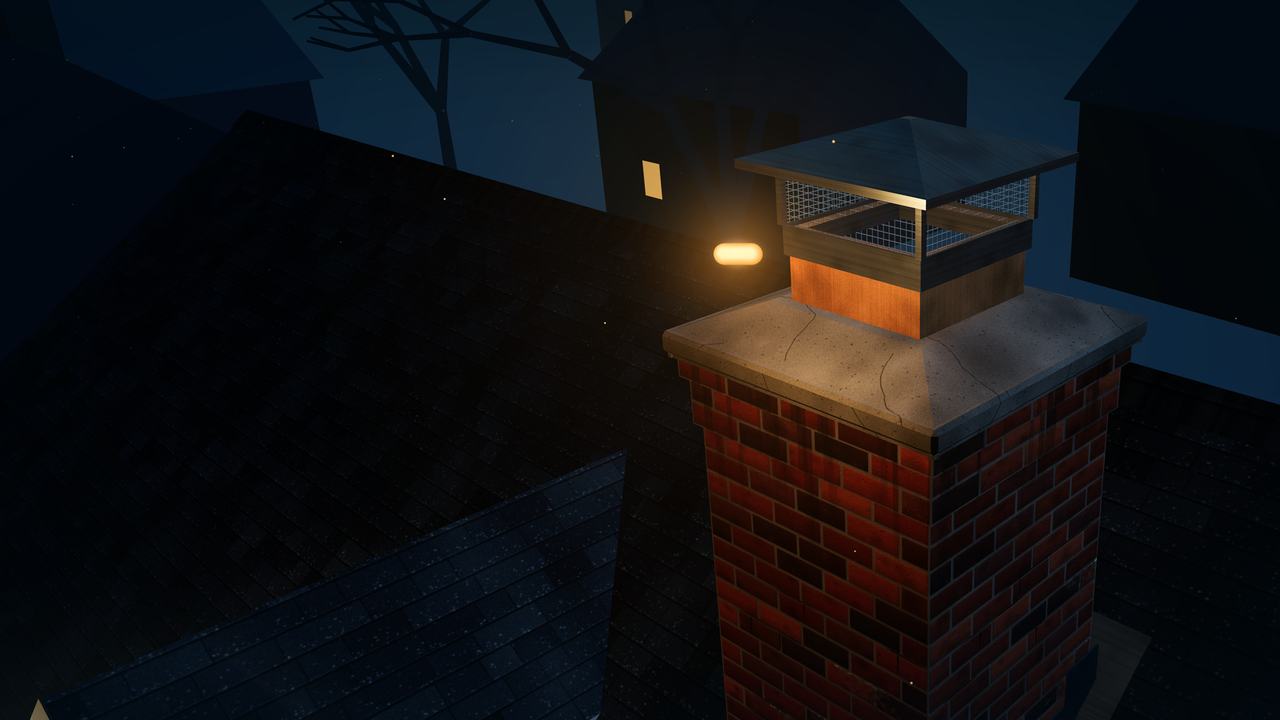
Three parts, three jobs
Three parts keep rain and snow out of a masonry chimney. Two sit at the very top and one sits at the roof line. They matter because, as the Chimney Safety Institute of America (CSIA) has said, most of the materials in a masonry chimney are harmed by direct contact with water.
| Part | Where it is | Its job |
|---|---|---|
| Cap | Over the flue opening, the highest point | Keeps rain, animals and sparks out of the flue |
| Crown | On top of the brickwork, around the flue | Seals the top of the masonry and sheds water |
| Flashing | Where the chimney meets the roof | Seals the joint between chimney and roof |
Each is made of different material and fails in its own way. Fixing one does nothing for the other two.
Why the names get mixed up
The same part has a different name depending on who is talking.
| Who | The slab on top | The cover over the flue |
|---|---|---|
| CSIA | Crown, or wash | Cap, or rain cover |
| Brick Industry Association | Chimney cap | Rain cap |
| New York’s residential code | Chimney cap | Rain cap |
| HUD’s inspection guide | Cap, or cement wash | Hood |
So when an estimate, a home inspection report or a code section says “cap”, ask which part it means. This guide uses CSIA’s words: the cap is the cover and the crown is the slab.
The chimney cap
What it is. The cover that sits over the opening of the flue. CSIA also calls it a rain cover.
What it does. Three things, according to CSIA:
- It keeps rain and snow out. An uncovered flue “can collect rainwater and funnel it directly to the chimney interior”.
- It keeps birds and animals from entering and nesting in the chimney.
- It works as a spark arrestor, keeping sparks from landing on the roof.
What it is made of. The Brick Industry Association (BIA) says rain caps range from metal caps to simple slabs set above the flue liner, and that a metal one should be corrosion-resistant. HUD’s Residential Rehabilitation Inspection Guide describes hoods made of stone or reinforced concrete on short masonry columns, or of sheet metal on short sheet metal columns. A cap can cover one flue, several flues or the entire chimney top. An archived CSIA blog post says common galvanized caps rust within years, while “Stainless steel caps won’t rust.”
What the code says. New York’s 2025 Residential Code sets specifications for a rain cap or a spark arrestor where one is installed on a masonry chimney. The open area under a rain cap must be at least four times the area of the flue outlet. Spark arrestor screen openings may not pass a sphere larger than 1/2 inch or block one smaller than 3/8 inch. The screen or cap must be removable so the flue can be cleaned.
How it fails. It rusts, its screen clogs, or it goes missing. HUD’s guide says sheet metal hoods with minor rust should be repaired and those with extensive rust replaced, and that dirty or clogged spark screens hurt the draft.
A caution about birds. The U.S. Fish and Wildlife Service says chimney swifts are protected by the Migratory Bird Treaty Act, and that it is usually required to wait until a nest is inactive before destroying it. The Service also asks owners of masonry chimneys that suit swifts not to cap them. Know both positions before you decide.
Missing, rusted and damaged caps are covered on our chimney caps page.
The chimney crown
What it is. CSIA’s definition: “The chimney crown (also referred to as the chimney wash) is the top element of a masonry chimney.” It covers and seals the top of the chimney from the flue liner to the outer edge.
What it does. It is a small roof for the brickwork. CSIA says the crown should slope so that water runs from the flue toward the edge, and that an overhanging drip edge sends the runoff clear of the brick and mortar below.
What it is made of. CSIA has said most masonry chimneys are built with an inadequate crown of common mortar mix “that will crack, chip, or deteriorate from weather exposure”. HUD’s guide calls mortar tops, or cement washes, the least durable kind and says they crack and break after several years.
What a sound crown looks like, source by source:
- CSIA: a Portland cement-based mixture, cast or formed, that overhangs every side of the chimney by at least two inches, with the flue tile standing at least two inches above it.
- New York’s 2025 Residential Code, for new work: concrete, metal or stone, sloped to shed water, with a drip edge and a caulked bond break around any flue liners.
- BIA’s design note for residential chimneys (reissued 1998): a prefabricated top generally performs better than one cast in place, and a cast top should not be feathered to a thin edge.
How it fails. It cracks, and water gets into the masonry below. HUD’s guide gives a rule for repair or replacement. Concrete and stone tops with minor, shallow spalling and cracking should be repaired. A mortar wash that is not properly sloped, is extensively cracked or spalled, or shows rust stains should be replaced.
We recommend the smallest repair that solves the problem. See chimney crown repair.
If your chimney is a framed box with siding. The CSIA blog post notes that a prefabricated chimney has no masonry crown. It has a sheet metal top called the chase cover.
The flashing
What it is. “Flashing is the seal between the roofing material and the chimney,” in CSIA’s words. It sits at the roof line, well below the cap and the crown.
What it does. It keeps rain and snow melt from running down the chimney into the house. CSIA also calls it the expansion joint between two dissimilar materials: it lets the roof and the chimney expand and contract at their own rates without breaking the seal.
What it is made of. BIA describes corrosion-resistant sheet metal in two layers. Base flashing goes on first, running up the face of the chimney and out along the roof. Counter flashing goes over it. Its top edge is set into a mortar joint of the chimney, and it laps down over the base flashing. The CSIA blog post calls the two layers step flashing and counter flashing.
The cricket. Behind a wide chimney, on the uphill side, there may be a small peaked structure. CSIA calls a cricket “a water deflector that serves to direct rainwater away from the chimney”. New York’s 2025 Residential Code requires one, for new work, where the chimney is more than 30 inches wide measured parallel to the ridge and does not meet the ridge.
How it fails. The CSIA blog post says many leaks are flashing related, and blames flashing that was “glued on, tarred on”. When water gets past, CSIA says it can damage ceilings and walls and cause rot in rafters.
How to tell them apart from the ground
Stay on the ground. BIA and HUD’s guide both suggest binoculars for masonry you cannot reach, and that is all you need. Read the chimney from the top down.
- The highest thing you see is the cap: a lid on short legs, sometimes with a screen. If the highest thing is a bare clay tile, there is no cap.
- Under the cap, a short length of flue tile sticks up.
- Around that tile, a slab lies across the top of the brick. That is the crown. You see its edge, not its surface. A lip that overhangs the brick is a drip edge. A tapered layer of mortar is what HUD calls a cement wash.
- The brick stack and its mortar joints run down to the roof.
- At the roof line, a band of metal wraps the chimney. That is the flashing. Tarred-on flashing is the problem the CSIA blog post names.
- Behind the chimney, on the uphill side, a small ridge in the roof is the cricket.
What to do when one of them fails
Work at the top of a chimney or on a roof is for a professional. Our guide to the signs your chimney needs repair lists what a homeowner can look for.
Water that gets past these three parts does not stay at the top. CSIA’s list of water damage runs from the flue lining down to the firebox and the hearth support: crown to hearth.
The price of a cap, crown or leak repair is on request. See chimney repair for how repairs work. For water inside the house, see chimney leak repair, and say where the water shows up when you book a visit.
If you cannot tell which part is at fault, a chimney inspection comes first. Level 1 costs $69 and is a basic visual inspection of the readily accessible chimney and fireplace components, checking for visible damage, deterioration and safety concerns. No internal camera inspection is included. Level 2 costs $99 and is a visual assessment plus an internal camera examination where accessible, and an evaluation for visible signs of water intrusion, leaks and masonry deterioration. It is not a comprehensive leak test and does not guarantee that a leak will be found.
We explain what we see and what it will cost before work starts. New customers get 15% off: tick the new customer box in the form, or say so when we call.