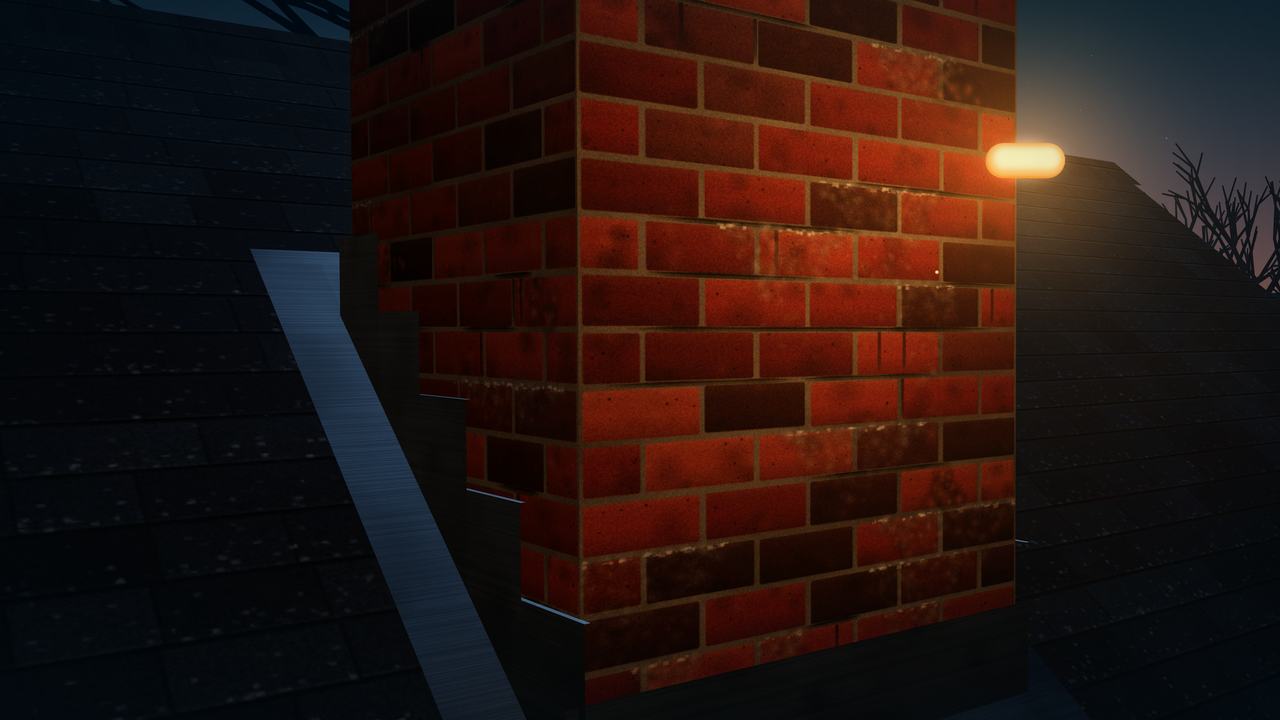
Chimney repair in Buffalo and Rochester, NY
ChimneY Royal repairs chimneys in Buffalo, Rochester and nearby towns: caps, crowns, brick and mortar joints, leaks and rebuilding. The price of a repair is on request, because it depends on what the chimney needs. We explain what we see and what it will cost before work starts, and we recommend the smallest repair that solves the problem.
Chimney repair
Price on request
We explain what we see and what it will cost before work starts.
How you get the price: ask in your request, on a call or on WhatsApp.
15% off for new customers. See the whole price list
Signs you need this
There are water stains on a ceiling or wall near the chimney.
Mortar between the bricks is crumbling, cracked or missing.
The chimney cap is missing or rusted.
The damper or other metal parts of the fireplace are rusting.
The chimney leans or looks unstable.
The crown at the top of the chimney is cracked or has pieces missing.
Brick faces are flaking or popping off, or white deposits show on the brick.
Included, and not included
Included
- The price of the repair, on request
- An explanation of what we see and what it will cost, before work starts
- A recommendation for the smallest repair that solves the problem
- Repairs planned with Western New York freeze and thaw cycles in mind
Not included
- Inspections. They are separate services with fixed prices of their own: the Level 1 chimney inspection is $69 and the Level 2 chimney inspection is $99.
- Chimney sweep and cleaning, which is $199.
- A list price. Repair prices are on request, because they depend on what the chimney needs.
- An inspection for a home sale, a new appliance or after a chimney fire. Tell us when you book so the scope can be confirmed.
What we check
The cap
The cover over the flue opening at the top of the chimney.
The crown
The masonry top that seals the chimney around the flue.
Brick and mortar joints
The brick and the mortar joints of the stack. Repairing the joints is also called tuckpointing or repointing.
Signs of a leak
Where water is getting in at or around the chimney.
The stack as a whole
Whether the chimney can be repaired, or is past patching and needs rebuilding.
We recommend the smallest repair that solves the problem.
How a visit works
Step 1: Request a visit
Send a request on the booking page and tell us what you are noticing.
Step 2: We call back to confirm
After a request, the team calls back as soon as possible to confirm the appointment.
Step 3: You hear the price first
Nothing starts until you know what we found and what the repair will cost.
Step 4: A repair that fits
Our advice is the smallest repair that fixes it. Repairs are planned with Western New York freeze and thaw cycles in mind.
Step 5: You decide
Whether to go ahead is your call.
Do not wait for a visit
Updated
This page walks through the common chimney problems, how each one is usually repaired in general terms, and how repair pricing works with us.
What chimney repair covers
Chimney repair is our name for the work that keeps a chimney sound and dry: chimney caps, crown repair, brick and mortar repair, leak repair and chimney rebuilding. The price of each one is on request, and each has its own page, linked in the sections below.
Two things hold for every repair. We explain what we see and what it will cost before work starts. And we recommend the smallest repair that solves the problem.
Why a small problem is worth fixing
A federal housing inspection guide from HUD notes that chimneys have greater exposure to the weather than most building elements. The Brick Industry Association says chimneys that experience more severe exposure may need repairs at shorter intervals than other brickwork.
Water is what turns a small defect into a large one. The Chimney Safety Institute of America (CSIA) has said that every masonry chimney material except stone deteriorates faster with prolonged contact with water, and that water in a chimney also rusts steel and cast iron parts.
Common chimney problems and how they are usually repaired
Here they are from the top of the stack down. The repair notes are general knowledge from the sources listed on this page. What your chimney needs depends on what we find when we look at it.
Chimney cap
The cap is the cover over the flue opening. CSIA describes it as an inexpensive way to keep water out of a chimney, and notes that it also keeps birds and animals from nesting inside. Without one, an open flue can funnel rain and snow straight into the chimney. Caps wear out too: a CSIA article notes that common galvanized metal caps rust in a matter of years, and CSIA says a cap should be made of sturdy, durable, corrosion resistant material. See chimney caps.
Chimney crown
The crown is the masonry top that seals the chimney from the flue liner to the outer edge. CSIA has said that most masonry chimneys are built with an inadequate crown made of common mortar mix, which can crack, chip or deteriorate from weather exposure. HUD’s guide draws the line by material and condition. A mortar top, which it calls a cement wash, should be replaced when it is not properly sloped, is extensively cracked or spalled, or shows rust stains. A reinforced concrete or stone top with minor, shallow spalling and cracking should be repaired, and one with extensive spalling or cracking should be replaced. One naming note: the 2025 Residential Code of New York State calls this part the chimney cap, and for new work it requires the cap to be sloped to shed water and to have a drip edge. See chimney crown repair.
Flashing
Flashing is the seal between the roofing material and the chimney. CSIA explains that it keeps rain and snow melt from running down the chimney into living spaces, where it can damage ceilings and walls and rot rafters. Flashing is generally repaired or replaced. A CSIA article notes that many chimney leaks are flashing related. See chimney leak repair.
Mortar joints
CSIA calls deteriorated mortar joints entry spots for water, and says weathered mortar becomes much more absorbent. The usual repair is repointing: the Brick Industry Association defines it as removing damaged mortar to a uniform depth and placing new mortar in the joint, and notes that it is sometimes called tuckpointing. Its triggers include mortar eroded deeper than 1/4 inch, crumbling mortar, voids and cracks. The mortar matters too. The association warns that mortar stronger than the original can lead to spalling of the brick face. See chimney tuckpointing.
Spalling brick
Spalling is brick losing its face. A CSIA article explains the cause: water absorbed into the masonry freezes and pops the faces of the brick off. The Brick Industry Association says that when brick is broken or heavily spalled and letting moisture in, replacing the damaged units may be necessary. White deposits on the brick are a related sign. The association says they are usually not harmful in themselves, but they return unless the water source is resolved first. When a chimney is unstable or has a noticeable lean, HUD’s guide says it should be dismantled and rebuilt. See chimney rebuilding.
Flue liner
The liner is the clay, ceramic or metal conduit inside the chimney that contains the combustion products and protects the chimney walls. Damage here is a safety matter. CSIA says that in a chimney fire, flue tiles crack and mortar is displaced, which gives flames a path to the wood frame of the house. After a fire, CSIA says, the fix might be a few flue tiles replaced, a new liner system installed or the chimney rebuilt, depending on the situation. It also notes that metal liners are mainly used to upgrade and repair existing chimneys. Liner work is not on our published price list. If you think the liner is damaged, tell us when you book so the scope can be confirmed.
Leaks
A leak is a symptom, and it can come from any of the parts above. A CSIA article points out that damaged or overflowing gutters and downspouts that dump water near or on the chimney can cause water to show up in unexpected places. Our Level 2 chimney inspection ($99) includes an evaluation for visible signs of water intrusion, leaks and masonry deterioration. It is not a comprehensive leak test and does not guarantee that a leak will be found. See chimney leak repair.
Freeze and thaw in Buffalo and Rochester
The mechanism is freeze and thaw. CSIA has said that masonry deteriorates quickly when moisture that has penetrated it periodically freezes and expands. The National Weather Service describes Western New York winters as changeable, with frequent thaws and rain, and says the same of the Rochester area.
NOAA’s 1991 to 2020 climate normals for the Buffalo and Rochester weather stations put numbers on it. Buffalo has a low at or below 32 F on about 124 days a year, but a high that stays at or below 32 F on only about 49 of them. Rochester’s figures are about 129 and 45. On the remaining days, about 75 in Buffalo and 83 in Rochester, the temperature is at or below freezing at one point and above it at another. That subtraction is ours and is not an official count of freeze and thaw cycles. Normal snowfall is 95.4 inches a year in Buffalo and 102.0 in Rochester, and snow on a chimney top becomes water when it melts.
The housing is old as well. Census Bureau estimates for 2020 to 2024 show that 61.0 percent of housing units in the City of Buffalo, and 53.7 percent in the City of Rochester, were built in 1939 or earlier. A house built before 1940 has stood through more than 85 winters. See our pages for Buffalo and Rochester.
This is why our repairs are planned with Western New York freeze and thaw cycles in mind. On timing, a CSIA article called summer a good time of year for masonry repairs and noted that spring rains can reveal leaks that may have been hidden in earlier months.
How repair pricing works
The price of a repair is on request. Repairs have no list price, because the price depends on what the chimney needs: a new cap and a rebuilt stack are very different jobs. We explain what we see and what it will cost before work starts, and we recommend the smallest repair that solves the problem.
Other services have their own published prices: the Level 1 chimney inspection is $69, the Level 2 chimney inspection is $99, and chimney sweep and cleaning is $199. The whole list is on the pricing page.
If you need an inspection for a home sale, a new appliance or after a chimney fire, tell us when you book so the scope can be confirmed.
When to call someone right away
Some things should not wait for a repair appointment.
- Signs of a chimney fire. CSIA lists loud cracking and popping, a lot of dense smoke and an intense hot smell, and notes that some homeowners report a low rumbling sound. Get out and call 911. CSIA advises not using the chimney afterward until it has been swept and evaluated by a qualified chimney professional.
- A carbon monoxide alarm. Get to fresh air and call 911. CSIA has warned that eroded mortar joints inside a chimney can let carbon monoxide leak into living areas.
- A gas smell. Leave the house and call the gas utility or 911.
If your chimney leans, or is dropping brick or mortar, request a visit and tell us what you are seeing, anywhere from crown to hearth. The team calls back as soon as possible to confirm the appointment.
Questions
How much does it typically cost to repair a chimney?
There is no single price, because a new cap and a rebuilt stack are very different jobs. At ChimneY Royal the price of every repair is on request. We explain what we see and what it will cost before work starts, so you have the number before you decide anything.
Is chimney repair covered under homeowners insurance?
That depends on your policy and on what caused the damage, and only your insurer can decide it. The New York Department of Financial Services names wear and tear as one of the exclusions in homeowners policies. We do not make coverage decisions. We explain what we see and what it will cost, and you can take that to your insurer.
Do roofers fix chimneys?
Roof work and chimney work overlap at the flashing. The Chimney Safety Institute of America (CSIA) has described flashing as the seal between the roofing material and the chimney. For the masonry itself, the Brick Industry Association says repointing should be done only by qualified, experienced repointing craftspeople. ChimneY Royal handles chimney caps, crown repair, brick and mortar repair, leak repair and rebuilding, each with the price on request.
What is a common chimney problem?
Water. The Chimney Safety Institute of America (CSIA) has said that every masonry chimney material except stone deteriorates faster with prolonged contact with water. Water gets in through an open flue, deteriorated mortar joints and failed flashing, and CSIA notes that a crown made of common mortar mix can crack, chip or deteriorate. Once inside, moisture that freezes expands and stresses the masonry.
What is the life expectancy of a brick chimney?
There is no single figure that holds for every chimney. The Brick Industry Association says chimneys that experience more severe exposure may need repairs at shorter intervals than other brickwork. Upkeep changes the answer: CSIA has said that a good repointing job with proper materials gives a chimney a much longer life span.
Can an old chimney be repaired?
It can be, and condition is what decides it. A federal housing inspection guide published by HUD in 2000 says deteriorated mortar joints should be pointed, and that chimneys that are unstable or have a noticeable lean should be dismantled and rebuilt. Both tests are about the state of the chimney, not its age. We recommend the smallest repair that solves the problem, and we explain what we see and what it will cost before work starts.
Where can I find chimney repair services in Rochester, NY?
ChimneY Royal's service area covers Rochester and Buffalo, along with Amherst, Williamsville, Tonawanda, Depew, Orchard Park, Hamburg and surrounding towns. Send a request with your ZIP code. The team calls back as soon as possible to confirm the appointment.
Sources
19 sources
All masonry chimney materials except stone deteriorate faster with prolonged contact with water, moisture that has penetrated the masonry freezes and expands, and water rusts steel and cast iron parts and stains walls and ceilings. A cap is an inexpensive way to keep water and animals out and should be made of sturdy, durable, corrosion resistant material, an open flue can funnel rain and snow into the chimney, the crown seals the top from the flue liner to the chimney edge and most masonry chimneys are built with an inadequate crown of common mortar mix that can crack, chip or deteriorate from weather exposure, flashing is the seal between the roofing and the chimney, and deteriorated mortar joints are entry spots for water that are commonly repaired by repointing, which gives a chimney a much longer life span when done well.
CSIA, Water and Masonry (archived copy of March 18, 2024)web.archive.org
Spalling happens when absorbed water freezes and pops the faces off the brick. Many chimney leaks are flashing related. Common galvanized metal caps rust in a matter of years. Damaged or overflowing gutters and downspouts dumping water near or on the chimney can cause water to show up in strange areas related to the chimney.
CSIA blog, Rain water and common chimney issues in spring (archived copy of January 27, 2023)web.archive.org
Chimneys have greater exposure to the weather than most building elements. A cement wash that is not properly sloped, is extensively cracked or spalled, or shows rust stains should be replaced. Reinforced concrete and stone caps with minor shallow spalling and cracking should be repaired, and those with extensive spalling or cracking should be replaced. Deteriorated mortar joints should be pointed, and unstable or noticeably leaning chimneys should be dismantled and rebuilt.
U.S. Department of Housing and Urban Development, Residential Rehabilitation Inspection Guide (2000)huduser.gov
Repointing means removing damaged mortar to a uniform depth and placing new mortar, and is sometimes called tuckpointing. It is called for when mortar has eroded deeper than 1/4 inch, is crumbling, or has voids or cracks. Mortar stronger than the original can lead to spalling. Heavily spalled brick may need to be replaced. Sills, parapets, chimneys and copings that experience more severe exposures may require repairs at shorter intervals. Repointing should be done only by qualified, experienced craftspeople. Efflorescence is the white deposit left on brick when moisture carrying dissolved salts evaporates, and it returns unless the water source is resolved first.
Brick Industry Association, Technical Notes 46, Maintenance of Brick Masonry (2017)gobrick.com
Efflorescence is usually not harmful to brick masonry.
Brick Industry Association, Technical Notes 23A, Efflorescence: Causes and Prevention (2019)gobrick.com
The section, titled Chimney caps, says masonry chimneys shall have a concrete, metal or stone cap that is sloped to shed water, with a drip edge.
2025 Residential Code of New York State, Chapter 10, section R1003.9.1codes.iccsafe.org
A flue liner is a clay, ceramic or metal conduit that contains the combustion products and protects the chimney walls. Metal liners are mainly used to upgrade and repair existing chimneys. Eroded mortar joints inside a chimney can let carbon monoxide leak into living areas.
CSIA, Chimney Liners (archived copy of June 15, 2023)web.archive.org
In a chimney fire, flue tiles crack and mortar is displaced, which gives flames a path to the wood frame of the house. Signs of a chimney fire include loud cracking and popping, a lot of dense smoke and an intense hot smell, and homeowners report a low rumbling sound. After a chimney fire the fix can range from replacing a few flue tiles to a new liner or a rebuilt chimney.
After a chimney fire, the chimney should not be used until it has been swept and evaluated by a qualified chimney professional.
On signs of a chimney fire, get everyone out of the house and call 911.
City of Portland Fire and Rescue, Chimney and wood stove safetyportland.gov
When a carbon monoxide alarm sounds, get outside to fresh air right away, then call emergency services or 911.
U.S. Consumer Product Safety Commission, Carbon Monoxide Questions and Answerscpsc.gov
If you smell gas, leave the premises immediately and call the gas utility or 911 from a different location.
National Fuel, Gas safetynationalfuel.com
Western New York winters are changeable and include frequent thaws and rain.
National Weather Service Buffalo, Buffalo climate narrativeweather.gov
The National Weather Service describes Rochester area winters the same way, with frequent thaws.
National Weather Service Buffalo, Rochester climate narrativeweather.gov
Days a year with a low at or below 32 F: 123.7 in Buffalo and 128.8 in Rochester. Days a year with a high at or below 32 F: 48.6 in Buffalo and 45.4 in Rochester.
NOAA National Centers for Environmental Information, 1991 to 2020 climate normals for Buffalo and Rochesterncei.noaa.gov
Normal annual snowfall is 95.4 inches in Buffalo and 102.0 inches in Rochester.
National Weather Service Buffalo, 1991 to 2020 climate normalsweather.gov
61.0 percent of housing units in the City of Buffalo and 53.7 percent in the City of Rochester were built in 1939 or earlier.
U.S. Census Bureau, American Community Survey 2020 to 2024 5-year estimates, table DP04data.census.gov
Summer is a good time of year for masonry repairs and other longer jobs, and spring rains can reveal leaks.
CSIA blog, Seasonal swings in chimney maintenance (archived copy of February 7, 2023)web.archive.org
Wear and tear is among the exclusions found in homeowners policies.
New York State Department of Financial Services, homeowners insurance questionsdfs.ny.gov
Ready for winter, crown to hearth.
Repairs for caps, crowns, mortar joints, brick and leaks, with the price on request. We explain what we see and what it will cost before work starts.
Book a visit
After a request, the team calls back as soon as possible to confirm the appointment.
Your request was not sent.
Check the form and send it again. We need your name, a phone number or an email, and your confirmation at the end.
It has not reached us yet. If it still does not go through, reach us directly.
Your request was sent. See what happens next